
A dedicated high-resolution spectrograph for surveying helium in exoplanet atmospheres, designed to study atmospheric escape and evolution.
Rotate the spectrograph, zoom in on the optics and follow the light through eleven components, from the fibres to the detector.
Explore NIGHT in 3D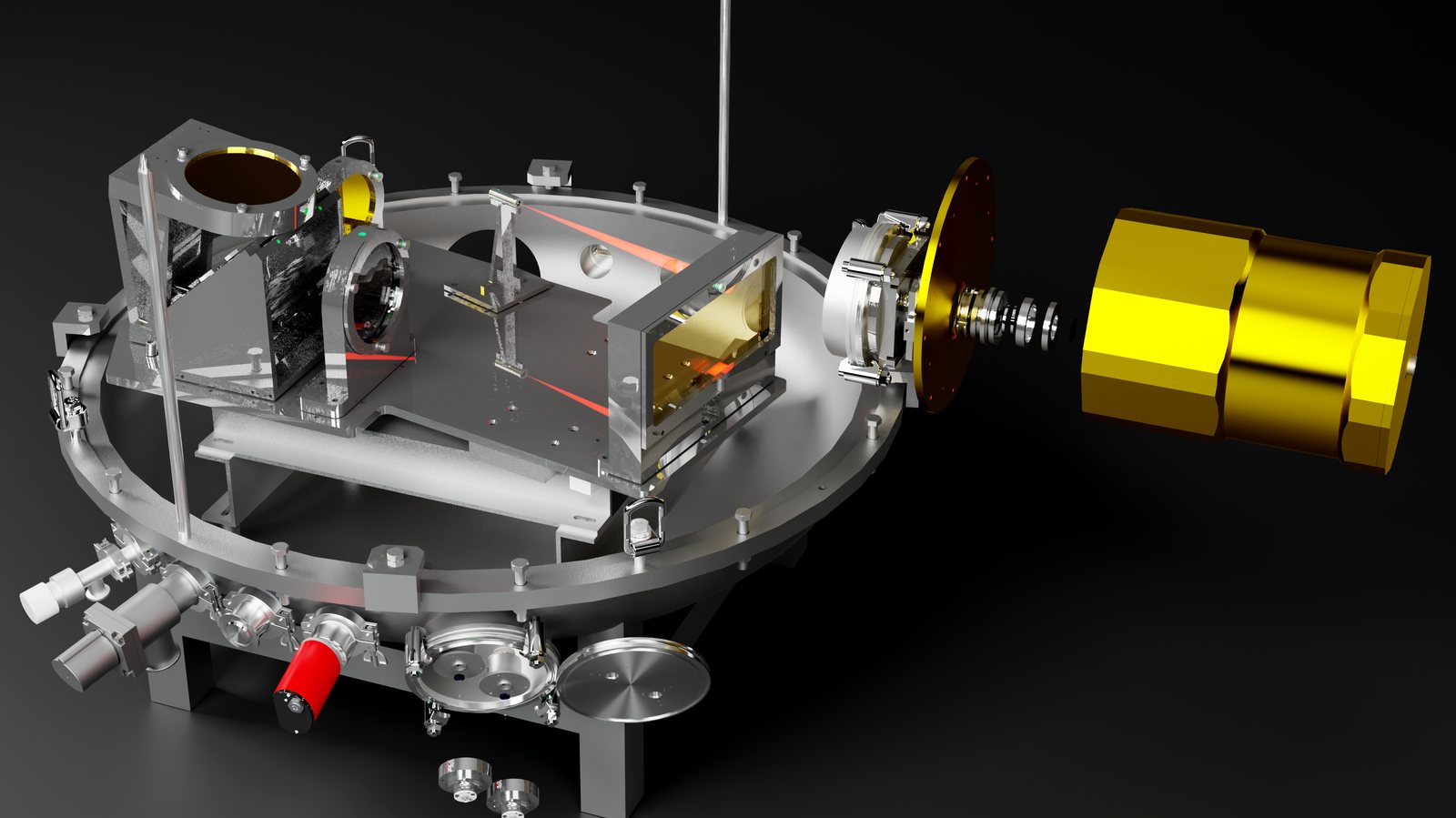
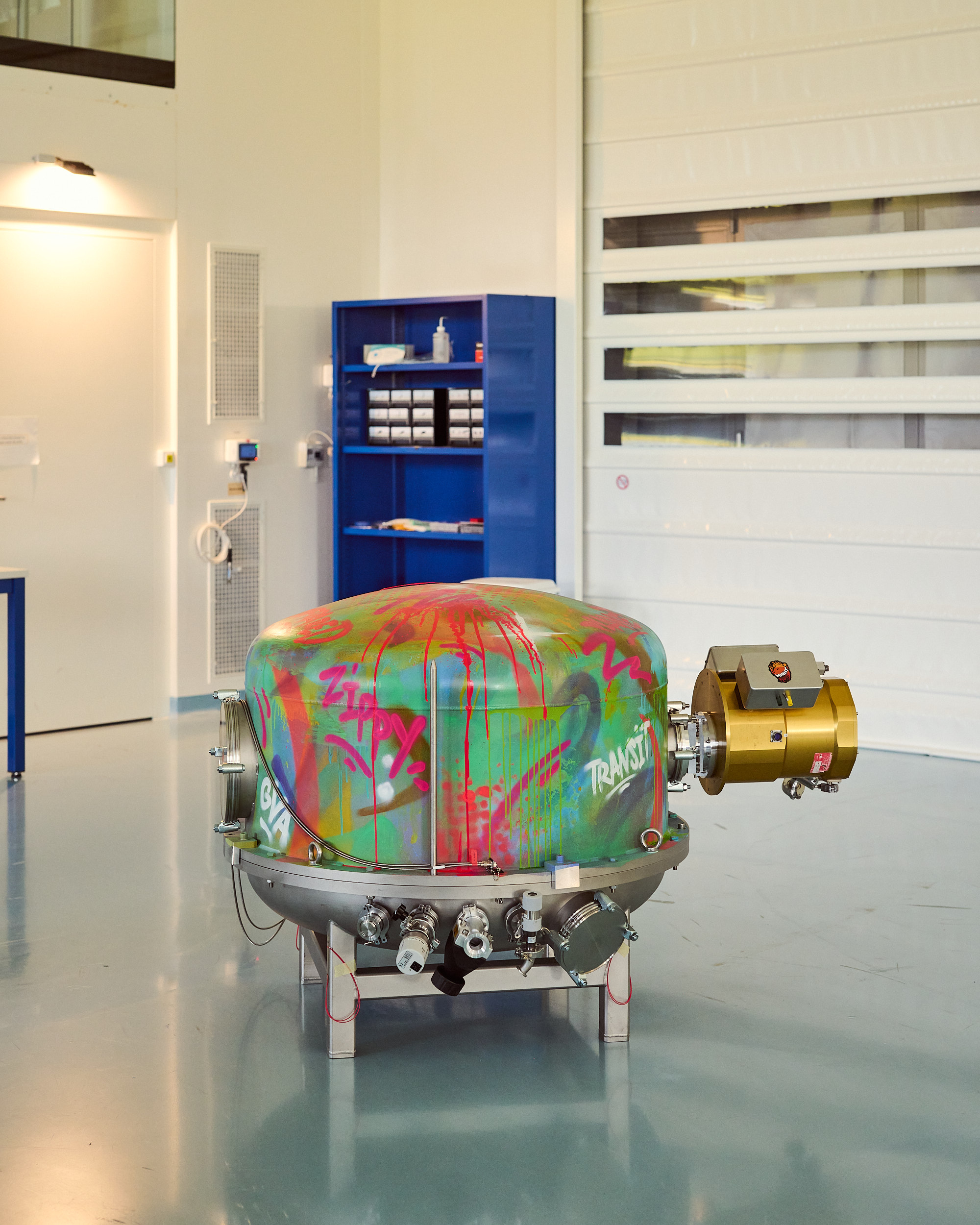
NIGHT (the Near-Infrared Gatherer of Helium Transits) is a narrowband, high-resolution spectrograph, marking the first dedicated survey instrument for exoplanetary atmosphere observations. Developed through a collaboration between the Observatory of Geneva, several other Swiss institutes, and the Université de Montréal, NIGHT aims to conduct an extensive statistical survey of helium atmospheres around 100+ exoplanets over several years.
During my PhD, I lead the development of this instrument from concept to completion. NIGHT will measure absorption from the metastable helium state during exoplanet transits, observable in a triplet of lines around 1083 nm. By focusing specifically on this tracer, we can efficiently survey a large sample of planets to better understand atmospheric escape processes.
Resolving power of approximately 62,000, resolving the helium triplet's lineshape and enabling a detailed analysis of the exoplanets' thermospheres.
Specialized for a narrow wavelength range around 1083 nm, maximizing efficiency for helium observations.
Approximately 70% throughput for the spectrograph, uniform across wavelength and polarization, outperforming other near-infrared high-resolution spectrographs.
Unique double-pass volume-phase holographic grating configuration to achieve ultra-high spectral resolution while optimizing throughput.
Designed for a multi-year survey of 100+ exoplanets to build a statistical understanding of atmospheric escape.
Efficient, compact instrument that can be deployed on 2-meter class telescopes while achieving sensitivity comparable to 4-meter facilities.
NIGHT comprises three main components:
NIGHT uses a HAWAII-1 1024 × 1024 infrared array, cooled to 80K, while the spectrograph operates at room temperature. A series of inclined cold heat filters in front of the detector filter out longer infrared wavelengths. Additional short- and longpass filters in the double scrambler filter out our specific wavelength band of interest.
The primary disperser is a high fringe-density, s-p-phased volume-phase holographic grating in a double-pass configuration, enabling a high resolving power while maintaining >80% throughput. This innovative optical design allows NIGHT on a 2-m class telescope to be as sensitive as existing high-resolution spectrographs on 4-m class telescopes.
NIGHT is designed to conduct the first large-scale survey of helium in exoplanet atmospheres. This survey will:
For more information about the NIGHT instrument or potential collaborations, please contact:
Casper Farret Jentink
Project Manager, NIGHT
Email: casper.farret@unige.ch